
“Is my child just a late bloomer, or is this something more?” We hear this from parents all the time, and if you’re asking it, you’re already paying close attention to your child, which counts for a lot.
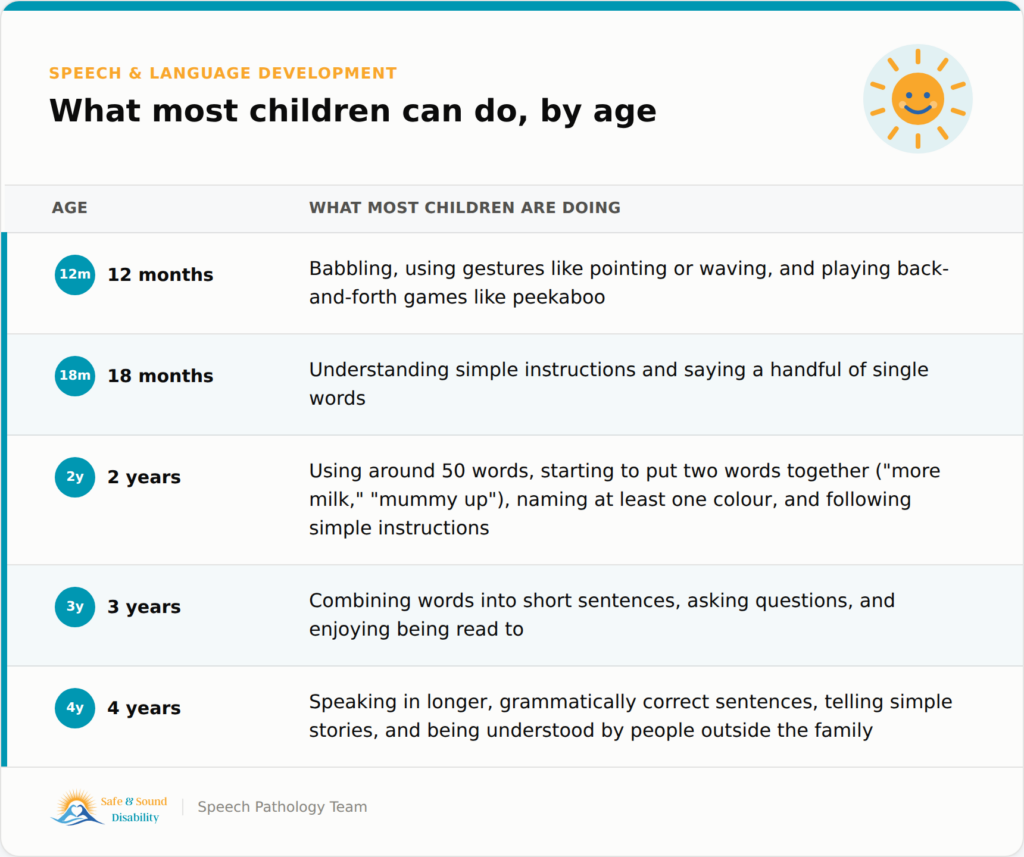
Every child develops at their own pace. Still, there are some general milestones that can help you gauge whether it’s time to check in with a speech pathologist.
Around one in three toddlers shows some signs of a language delay at two, and plenty of them catch up on their own by age four. So if your child is a bit behind, that doesn’t automatically mean something’s wrong. A second opinion from someone who knows what to look for never hurts, though.
When to reach out for help
It’s a good time to speak with a speech pathologist if your child:
- Isn’t using any words by 18 months
- Has fewer than 50 words or isn’t combining words by age 2
- Is hard to understand, even for family members
- Seems frustrated when trying to communicate
- Has stopped using skills or words they’d previously had
And trust yourself on this one. If a professional isn’t worried but you still are, it’s completely fine to ask for a second opinion or a formal assessment.
What a speech pathologist actually does
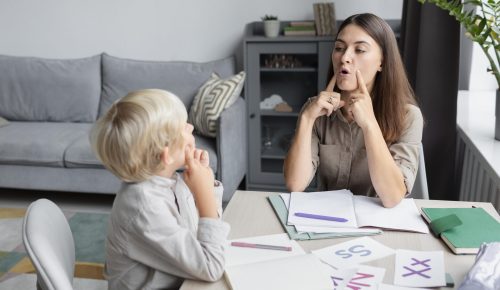
A speech pathologist doesn’t just work on “talking.” We look at understanding language, using language, play, and social interaction, then build a plan around your child’s strengths. For a lot of kids, that means fun, play-based sessions, plus a few strategies you can use at home.
If your child has an NDIS plan
Early support for speech and language delays is exactly what NDIS early intervention funding is meant for. Children under 6 can often get support through the NDIS Early Childhood Approach based on evidence of developmental delay, no formal diagnosis needed. Call the NDIS on 1800 800 110 to be connected with your local Early Childhood Partner, or ask your current provider about a referral.
The bottom line
Early support makes a real difference. If something feels off, it’s worth a conversation.
Our speech pathology team at Safe and Sound Disability works with kids and families on exactly this kind of thing every day. If you’re unsure whether your child is on track, or you’d just like to talk it through, get in touch. We’re happy to help.